
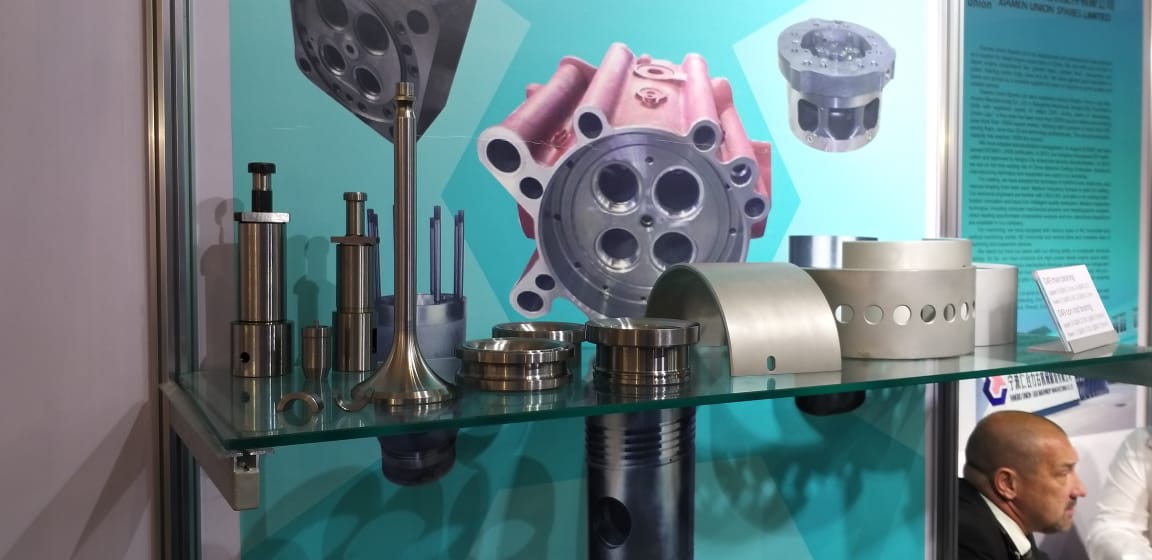
Rail workshops across Africa often face the same challenge: locomotives need to stay in service, but sourcing the right ALCO, EMD, and GE locomotive engine components from overseas suppliers can be risky if the part cannot be verified before it ships.
The real question is not whether a supplier has stock. It is whether the supplier can prove that the component matches the correct engine family, part number, and service history. For African buyers, that verification step is what protects fleet uptime and avoids repeat shipping costs.
Why part authenticity is critical for African rail fleets
Locomotive engines in Africa often operate in difficult environments — long routes, heat, dust, and limited access to fast replacement stock. A single wrong component can turn into a chain reaction of downtime, delayed repairs, and additional freight costs to correct the mistake.
That is why buyers sourcing ALCO 251, EMD 645/710, or GE 7FDL parts should treat authenticity as a technical requirement, not a trust exercise.
Start by confirming the engine platform
Before checking any component, identify the correct locomotive family:
- ALCO 251
- EMD 645/710
- GE 7FDL
Each platform has its own tolerances, materials, and design standards. A part that looks similar across platforms may still be incorrect for the specific engine.
The four checks that define an authentic component
A genuine locomotive engine part should satisfy:
- the correct engine family
- the correct part number or technical variant
- physical identifiers that match expectations
- a source history that can be explained clearly
If any of these are missing, the part should not be treated as verified.
How to check authenticity before you buy
Confirm the exact part number
The part number is the fastest way to filter out incorrect components. If a supplier cannot confirm it, or if it does not match the engine family, that is a clear warning sign.
This is especially important for components such as:
- cylinder liners
- power assemblies
- turbocharger units
- crankshafts
- water pumps
- connecting rods
- camshafts
- fuel injectors
Check physical markings and condition
Look for:
- stamps
- serial numbers
- casting marks
- machining finish
- wear pattern
- surface condition
- packaging labels
A part can be cleaned, repainted, or relabeled and still be the wrong component for the application.
Ask for supplier history
A trustworthy supplier should be able to explain where the part came from, how it was stored, and why it is being offered in its current condition.
Confirm fitment and specification
Even a part that looks correct still has to match the required tolerances and service standard. In locomotive work, approximate compatibility is not the same as verified compatibility.
What African buyers should expect from an exporter
A dependable exporter should provide:
- the exact engine family
- the correct part number
- a clear condition description
- traceability where available
- visible identifiers
- realistic lead time
- honest feedback if the part is not suitable
That is what separates a basic seller from a supplier who understands the realities of locomotive maintenance in Africa.
Real export examples from Africa-bound orders
In one shipment, we supplied a GE 7FDL turbocharger assembly as part of a mixed order containing 9 other components. The total order value was above $9,500, the turbocharger shipped in 5 days, and the result was 0% rejection and 0% failure. Verifying the unit’s casting marks and serial data before dispatch made the difference.
In another order, we handled an ALCO 251 power assembly where the buyer suspected the part had been reconditioned and repainted without disclosure. We checked the machining marks, wear pattern, and supplier documentation to confirm the component’s true condition. That order was worth around $7,200, included the power assembly plus a few smaller parts, and shipped in 4 days with 0% rejection/failure.
Those outcomes came from verifying identity first, not from assuming the part was correct because it was described that way.
Different parts, same verification approach
ALCO 251 locomotive engine components
For ALCO 251 parts such as power assemblies, cylinder liners, and turbo components, the priority is confirming exact part identity through casting marks, machining finish, and documented history — not just matching the engine family name.
EMD 645/710 locomotive engine components
For EMD 645/710 parts, common risks involve components being reconditioned or cosmetically altered without clear disclosure. Checking wear pattern, machining consistency, and supplier records helps confirm whether a part like a crankshaft, water pump, or cylinder liner is genuinely suitable.
GE 7FDL locomotive engine components
For GE 7FDL parts, especially turbocharger assemblies and power-related components, fitment and source verification are critical. A part that appears correct externally can still fail if its internal specification does not match.
The common misunderstanding about aftermarket parts
Many buyers assume that aftermarket automatically means lower reliability. That belief is too simplistic.
Reliability depends on:
- manufacturing control
- material quality
- dimensional accuracy
- traceability
- fitment control
- consistency of source
A properly verified aftermarket component can perform as well as an OEM part. A poorly sourced part, regardless of label, can still cause failure.
The real focus should be on proof of identity, not the aftermarket-versus-OEM debate.
A practical checklist for African buyers
Before approving a purchase, ask:
- Is this the correct engine family?
- What is the exact part number?
- Can the supplier show stamps, serials, or casting marks?
- Does the wear pattern make sense for the claimed condition?
- Has the part been reconditioned or repainted without disclosure?
- Is the supplier history consistent?
- Is the condition description accurate?
- Does the part match the required fitment and specification?
If the answers are unclear, treat the part as unverified.
Why this approach matters for Africa
African rail operators need parts that arrive correctly identified, properly verified, and ready for service. That is why our export process prioritizes authenticity checks first and delivery speed second.
When part identity is confirmed early, maintenance planning becomes more predictable, and the risk of costly delays drops significantly.
Source authentic ALCO, EMD, and GE locomotive engine components for Africa
If you are sourcing ALCO, EMD, or GE locomotive engine components for Africa, work with an exporter who verifies the part before shipment, not after it arrives and causes a problem.
We support African buyers with:
- clear part identification
- export-ready supply
- practical verification
- fast lead times
- mixed-order support
- honest technical assessment
Leave a Reply
You must be logged in to post a comment.